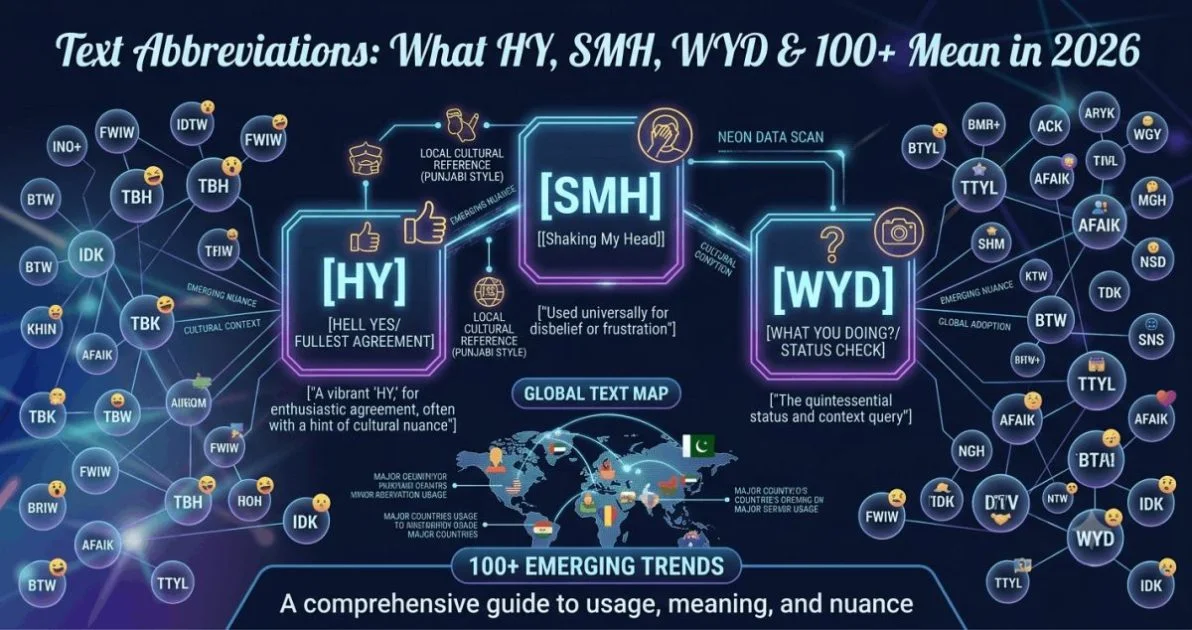
Text slang moves fast. One week everyone’s typing Text Abbreviations “TBH,” the next it’s “ISTG” or “WYO.” If you’ve ever stared at a message wondering what your friend actually meant, you’re not alone — these abbreviations show up constantly in texts, DMs, and comments, and half the fun (and confusion) is keeping up with them.
Here’s a full breakdown of 14 of the most common ones, what they mean, and how people actually use them.
Different Text Abbreviations
HY — “Hey You” or “How’s Yours”
Meaning: HY is most often short for “Hey You,” used as a casual, friendly greeting. In some contexts, especially in group chats comparing something (an order, a grade, a score), it can mean “How’s Yours.”
Example: “HY! Haven’t talked in forever, what’s new?”
Where you’ll see it: Opening lines in DMs, casual check-in texts between friends.
SMH — “Shaking My Head”
Meaning: SMH expresses disbelief, disappointment, or mild frustration — the text version of literally shaking your head at something.
Example: “He forgot our anniversary again, smh.”
Where you’ll see it: Reacting to bad news, dumb mistakes, or frustrating situations. Can be sarcastic or genuinely annoyed depending on tone.
WYD — “What You Doing” / “What Are You Doing”
Meaning: A quick, informal way to ask what someone is up to right now.
Example: “WYD tonight? Thinking about grabbing food.”
Where you’ll see it: Opening texts to friends, often used to start a hangout plan or just check in.
WTV — “Whatever”
Meaning: Shorthand for “whatever,” typically signaling indifference, mild dismissal, or “it doesn’t matter either way.”
Example: “You can pick the movie, wtv works for me.”
Where you’ll see it: Casual conversations where someone is going along with a decision without strong preference — or brushing something off.
WYLL — “What You Like/Love” (context-dependent)
Meaning: Less universally standardized than others on this list; commonly used to ask about someone’s preferences in a given moment. Meaning can shift depending on regional or platform slang trends, so it’s worth reading the surrounding conversation.
Example: “WYLL for dinner, pizza or tacos?”
Where you’ll see it: Casual texts asking about preferences.
TBH — “To Be Honest”
Meaning: Used to preface an honest, sometimes blunt opinion — a way of signaling “I’m giving it to you straight.”
Example: “TBH, I think you should just go for it.”
Where you’ll see it: Everywhere — texts, comments, captions. One of the most widely used abbreviations on this list, cutting across nearly all age groups and platforms.
IMO — “In My Opinion”
Meaning: Signals that what follows is a personal opinion, not a stated fact — a softer, more qualifying cousin of TBH.
Example: “IMO the book was way better than the movie.”
Where you’ll see it: Debates, recommendations, comment sections — anywhere someone wants to frame their take as subjective.
WTM — “What’s the Matter” / “What’s the Move”
Meaning: Can mean either “what’s wrong?” (checking on someone) or “what’s the plan?” (asking what’s happening next), depending on context.
Example: “You’ve been quiet all day, wtm?”
Where you’ll see it: Check-in texts, or planning conversations among friend groups.
MBN — “Must Be Nice”
Meaning: Often used sarcastically to react to someone’s good fortune, sometimes with a hint of envy or playful teasing — occasionally used sincerely.
Example: “She’s on vacation again… mbn.”
Where you’ll see it: Reacting to a friend’s flex, humblebrag, or lucky break, typically on social media or group chats.
ISTG — “I Swear to God”
Meaning: Used for emphasis, to underline that you’re being completely serious or that something is absolutely true.
Example: “ISTG if he cancels on me one more time…”
Where you’ll see it: Venting, storytelling, or making a strong point — frequently paired with frustration or disbelief.
WYO — “What’s Your Order” / “Whatever You’re On”
Meaning: Most commonly used to ask what someone wants (e.g., from a food run), though it can also mean “whatever you’re doing/on” in some casual contexts.
Example: “Heading to the coffee shop, wyo?”
Where you’ll see it: Group chats coordinating food, drinks, or errands.
WTW — “What’s That Worth” / “What’s the Word”
Meaning: Typically used to ask what’s going on or what someone thinks about something — a casual conversation starter.
Example: “WTW, you free this weekend?”
Where you’ll see it: Opening lines checking in on plans or catching up.
GTS — “Good Times” / “Going to Sleep” (context-dependent)
Meaning: Meaning shifts significantly by context — it can close out a conversation (“heading to bed”) or reflect on a fun moment that just happened. Always check the surrounding messages.
Example: “That party was wild, gts  ” vs. “It’s late, gts, talk tomorrow.”
Where you’ll see it: End of a conversation, or reminiscing about a shared experience.
WYF — “What You Feel” / “Where You From”
Meaning: Depending on context, either asks how someone feels about something, or (less commonly today) asks where someone is from.
Example: “WYF about switching plans to Saturday instead?”
Where you’ll see it: Casual check-ins gauging someone’s opinion or feelings on a plan.
Quick Reference Table
| Abbreviation | Meaning |
| HY | Hey You / How’s Yours |
| SMH | Shaking My Head |
| WYD | What You Doing |
| WTV | Whatever |
| WYLL | What You Like/Love |
| TBH | To Be Honest |
| IMO | In My Opinion |
| WTM | What’s the Matter / What’s the Move |
| MBN | Must Be Nice |
| ISTG | I Swear to God |
| WYO | What’s Your Order |
| WTW | What’s That Worth / What’s the Word |
| GTS | Good Times / Going to Sleep |
| WYF | What You Feel / Where You From |
Why Text Slang Keeps Evolving
New abbreviations pop up constantly because texting rewards speed. As platforms like TikTok, Snapchat, and Instagram push faster, shorter communication, abbreviations spread quickly through comment sections and captions before becoming everyday texting shorthand. Staying current just takes paying attention to context — most of these terms only really click once you see how they’re used in a real conversation.

William is a Master’s degree holder in English Language and Literature, a passionate word enthusiast, and the founder of PunandPuns.com. He loves exploring creative wordplay and sharing humorous content that brings joy, laughter, and a fresh perspective to everyday language.


